
Near the city of Kisumu in western Kenya, a steel tower rises above Masogo Market.
Topped with solar panels and visible across the open grounds, it stands beyond rows of vendors selling produce and clothing from wooden tables and cloths spread on the grass. People circulate through the market, threading between displays, stopping to bargain and shifting bundles of goods from hand to hand.
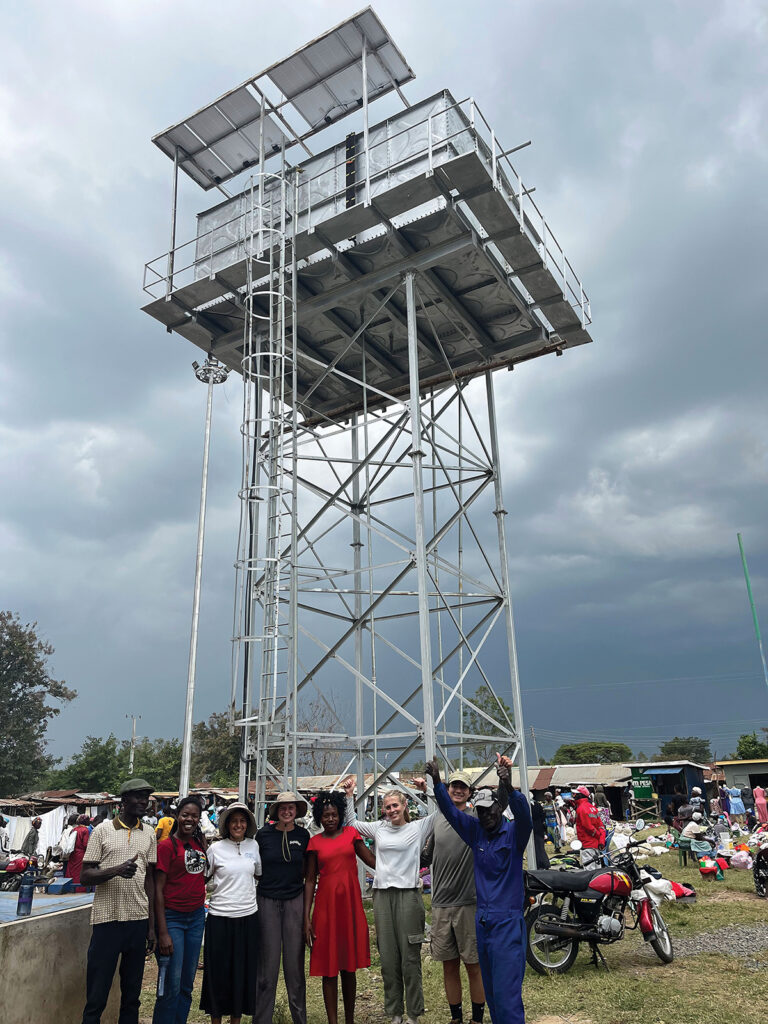
The tower is not a landmark for its own sake. It signals what the market now has: a clean, consistent water source.
Part of a larger distribution system, the 9-meter-tall structure serves about 3,000 people who work, sell and pass through the market. At the kiosk below, taps run throughout the day. Nearby wash tables give vendors a place to rinse vegetables before setting them out for sale, improving health and hygiene in the daily routines that shape the market.
In summer 2024, Cal Poly’s Engineers Without Borders chapter brought a small group of students to Masogo to help implement the water system. The student organization supports community-led infrastructure projects, and in Masogo that has meant returning to the market to listen, adjust and keep building. It begins back on campus in San Luis Obispo, then comes into focus in the dust and foot traffic of Masogo.
Learning to Listen First
The chapter starts with context, not calculations.
At the beginning of fall quarter, new members go through a four-week crash course focused on international development and community-based engineering. The emphasis is on process, from assessment through design and implementation, rather than rushing to a solution. Team leaders walk students through past projects and speak candidly about what worked and what didn’t, including moments when a well-intended plan missed local needs.
That honesty is what drew in Dorin Meydany, a third-year environmental engineering student, who joined as a first-year after hearing a student speak about the chapter during a campus gathering.
Shannon Mason, a fourth-year biomedical engineering student, had been involved with a similar group in high school. She stayed after her first meetings for the team’s culture and the chance to contribute to projects that unfold over years, not weeks.
Early on, the message is clear: the math matters, but it comes second.
“You have to listen to the community,” Meydany said.
By the third week, the training becomes more specific as students break into project teams and begin learning the history and goals of each partnership. On the Kenya team, that introduction includes time together outside the usual meeting format. During one session, current team members made chapati for new recruits, sharing a taste of Kenyan culture before the work turns to logistics and design.
The Kenya team typically includes 20 to 30 students. While the work is engineering-based, the chapter welcomes students from across campus, building teams that can ask better questions and stay responsive as projects evolve.
For Mason, that structure was what made her stay. International development, she learned, isn’t a handoff. It’s returning, reassessing and adjusting when conditions on the ground demand it.
When the Plan Changed
When the Kenya team arrived in Masogo in summer 2024, they expected to build onto what was already there.
The community still had a water kiosk left from an older distribution system that had failed years earlier. In early planning, the team assumed they could tie the new system into that existing structure. From a distance, it looked like the most straightforward path forward.
On the ground, that plan fell apart.
The kiosk sat on land controlled by a private owner who wasn’t willing to make it part of the project. The connection point the team had counted on was gone.
“It was a moment where we had to shift gears,” Mason said. “We were a little taken aback.”

With the original plan off the table, the team began reshaping the kiosk design in real time. Community members weighed in daily, and students worked through local partners and an in-country contractor to translate that input into a design that matched how people collected and used water.
One change came quickly. The original design placed taps facing the market, but community members explained that many people make a living delivering water by bicycle to nearby homes. So the team added taps to the back of the kiosk, expanding access for water carriers without forcing them through a gated area.
Other features reflected needs the team had discussed with vendors during earlier conversations. Wash tables were added to the kiosk, giving produce sellers a place to clean vegetables before sale — a small change in cost, but a meaningful one for the women who work in the market each day.
Within days, the revised design was ready.
“We could communicate every day,” Meydany said. “That made a huge difference.”
The experience reinforced what the team had been testing all along: designs only work when they respond to how people already live and work.
From Build to Impact
When the team returned to Masogo in summer 2025, their role had shifted.
Construction was finished. The focus moved to observation — how the system was being used, how it was being maintained and how it had reshaped daily routines around the market.
Part of the visit centered on operations. The team met with the local water board to review maintenance plans and clarify responsibilities. They walked through the site together, watching how people moved through the kiosk area and where the wash tables were most heavily used.
Much of the visit happened in conversation.
With the help of a translator, students visited nearby homes and spoke with vendors and community members about the project’s impact. Some feedback was practical. People talked about the taste of the water, noting that it was softer and less salty than what they had relied on before from shallow wells or collected rainwater.

Others talked about access. “There will be lines in the morning before the kiosk opens,” Meydany said, describing the rhythm that now shapes the market. The system serves vendors and people who travel in from surrounding areas to sell their goods. Over time, a larger community has grown up around it.
“It’s a hub,” Meydany said.
For Mason, that steady routine was the point. “With financial support, we were able to create opportunities for a lot of people,” she said. “That’s what made the decisions matter.”
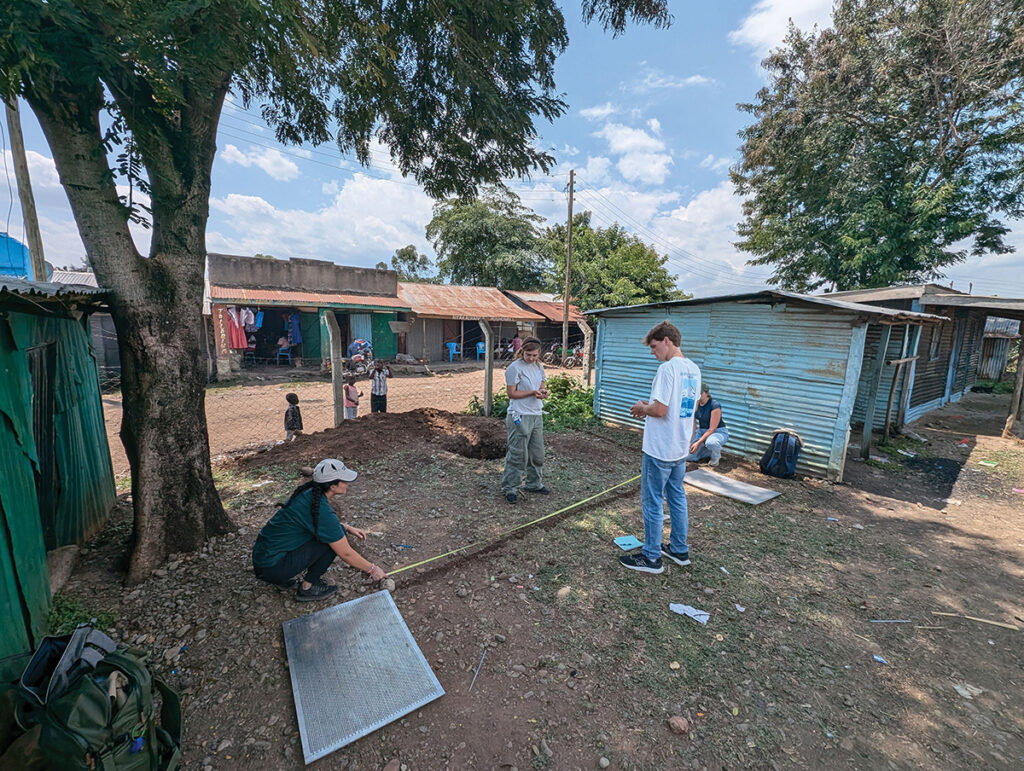
The return trip also marked a turning point. Alongside follow-up surveys, the team conducted soil testing and began planning the next phase: a sanitation facility designed with women vendors in mind. The effort builds on partnerships that have shaped the work over time, including the Golden Girls Foundation, which supports women and girls through education and mentorship. In the meantime, the team continues monitoring the water system to make sure it holds up over time.
For Meydany, the summer 2025 visit carried a quieter moment of confirmation. On one of their first walks through the market, a member of the local water board she had met the year before recognized her and greeted her by name.
“That told me we had built real relationships,” she said.
Around them, the market kept moving.