
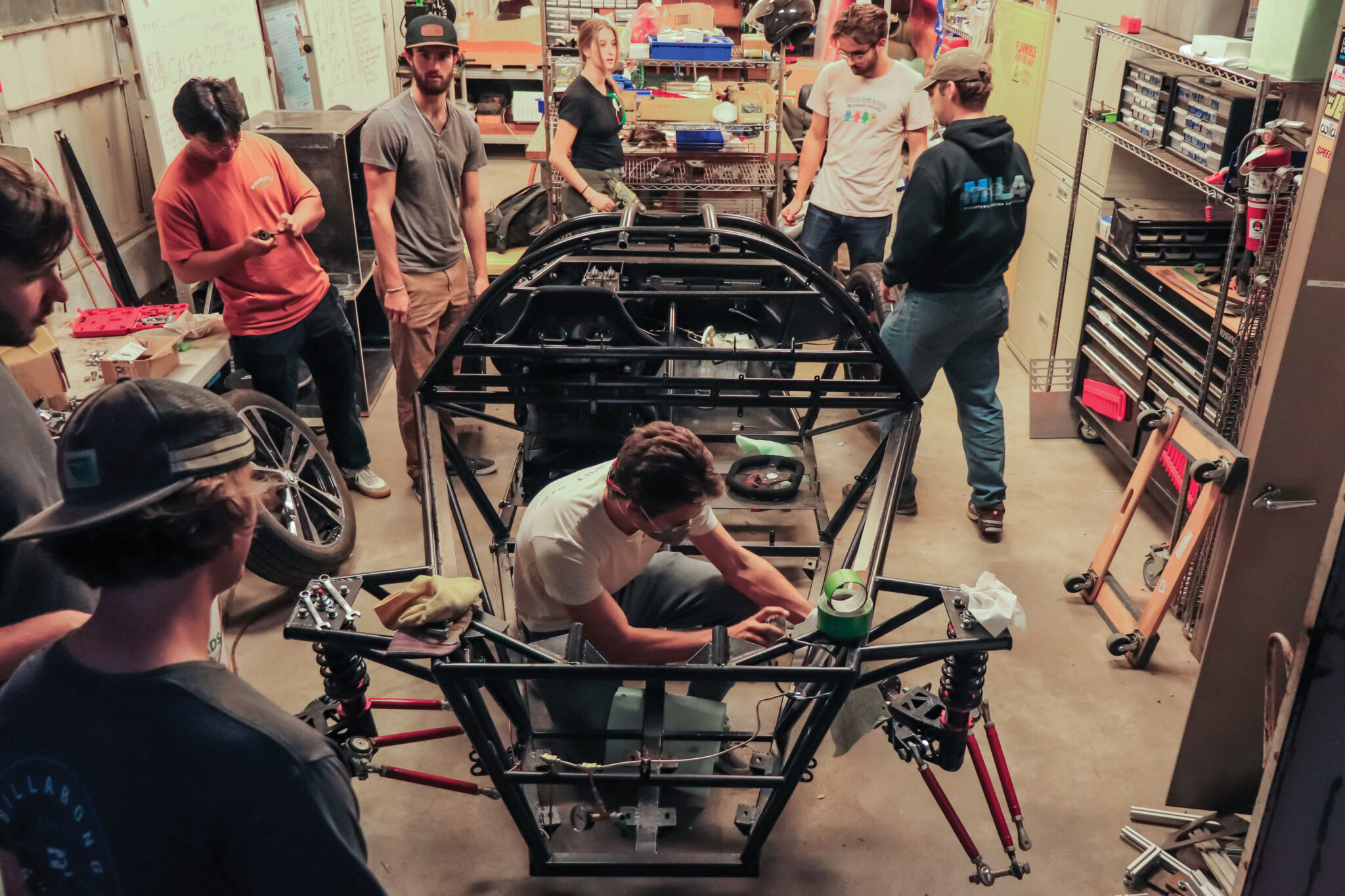

Sometimes, changing the world starts with an engine and four wheels. At least that’s the mindset echoed throughout Cal Poly’s Prototype Vehicles Laboratory (PROVE Lab).
Members of the student-run organization strive to solve real-world issues by pushing the boundaries of engineering through sustainable transportation designs and putting this technology into the hands of students for the purpose of learning.
“A core part of our program is education and mentorship,” said high-voltage lead Bryan Lew. “We bring together students from across engineering disciplines and work in an industry-style environment through subsystem projects guided by our technical leads.”
The student-led team aims to tackle emerging and modern vehicle trends with a focus on autonomous driving.
“PROVE’s core ethic is to put prototype projects in students’ hands to build their skills and prepare them for a career in their chosen field,” said project manager Lena Roberts.
The PROVE team’s latest project, MILA, is a fully electric, long-range car designed for energy efficiency and innovation.
“Our leadership team wanted to try a new sustainable energy source and potentially make a road-safe vehicle,” Roberts said.
Previously, the team worked on a solar vehicle, cleverly named Dawn. After focusing on the club’s new mission, they pivoted to building an endurance vehicle.
“Our goals include exploring the limits of electric power, designing an aerodynamically efficient vehicle utilizing composites and producing a drivable vehicle,” said aeroshell lead Yusuf Kothambawala.
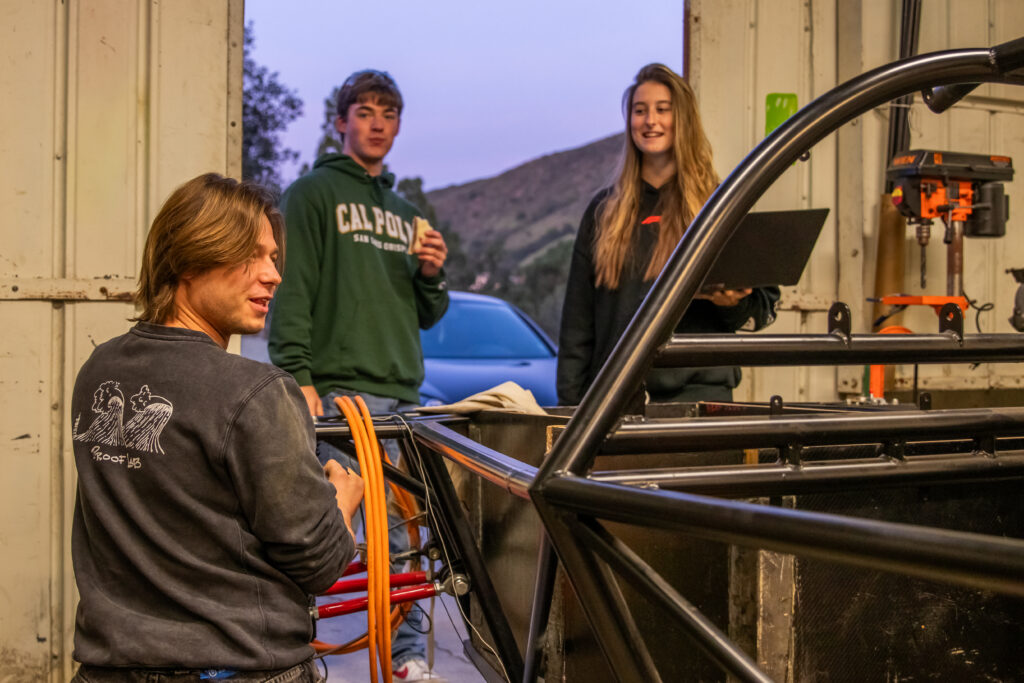
Their plan is to make MILA check those boxes.
“MILA is currently in the process of being converted into an autonomous vehicle due to changing industry technology and focuses,” said project manager Isaac Wang.
The team members hope to finish MILA’s design and focus on developing it into a vehicle that measures up to industry standards.
“We’re laying the groundwork for future autonomy integration with guidance from our electrical engineering adviser, Professor Siavash Farzan, and mechanical engineering adviser, Professor Rick Lasko,” Lew said.